Sunday, August 30, 2009

How Long Does It Take To See Results From Zumba

Wood arrives at Manta


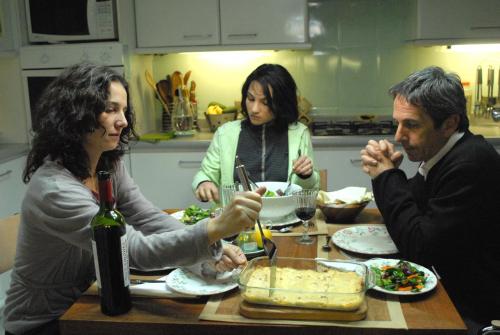
Mario is a young man committed to the music, with music, comes from the conservatory in Berlin, played the clarinet and wants enter the Philharmonic Santiago de Chile, not only to demonstrate his great talent, but because the pay is good, but still leave it in the waiting list and your income is not possible, that it frustrates and puts his claim, making it stop in the orchestra of the police.

Teresa is a psychologist who works with prostitutes, advised to make your job more hygienic and therefore more worthy. She is fully involved in their work and forget a little of his family, which is the only 15 year old daughter, who is pregnant but has only told his father, and this tells Teresa, his ex-wife. Attempting to remedy what he is not committed.

Edmundo is a middle-aged bachelor, works at a popular salon and plans to buy car, but his work barely enough to live and stay with her mother, who lives in the same house, seeking a bank loan to its desired ends car enrolling with the cashier that attended to him. Edmundo live with the weight of the memory of his late father, a simple man who gave his life for the people, so that everyone who went to him to leave with a good haircut, he was proud yet disappointed not want to end the same way. To make matters worse, the cemetery is cited for license renewal of his tomb, but as we know he has no money and leaves of burnt along with other bodies.

And finally we have to Patricia, a prostitute very ill, which survives the streets, looking for help, but not accepting it, because above all things she is proud, however with that is not enough.

These are the four stories that take place in 'The Good Life', latest film from Chilean director Andrés Wood, and all intersect, just a touch, a glance, a scream. As all lives intersect in this world. The lady I see TV news giving the offender that we see in the news, the stranger sitting next to us on the bus, the street vendor that offers its products, they all have their stories, their lives and we know that, or pretend to know. In The good life no one changes the course of the life of another, that is their own. The mother has to get his daughter back and accept that her ex-husband is sleeping with a prostitute, is a miserable. The barber must accept his manhood woes worker, break up with your partner, to recover his father's grave and bring joy to his mother until her last day. And the young musician must find his own destiny.

The good life while not going too deeply into the stories, we understand, we sympathize with the characters but we can not fully attuned to any of them are simply there and tell us their problems and nothing else the film is not intended to provide solutions or answers. Perhaps that was the aim of Wood, just tell us that like them we are also there, living and performing our stories and does not depend on anyone else how to culminate but ourselves, and that is the concept of having a good life . So in the end we know that what we saw was based on real events, although you say that was not necessary.

Andrés Wood fails to surprise with this film as he did with Machuca, we left the room with a tasteless, a story well told but not full, with an excellent picture but does not dazzle, but with good treatment that we do not keep them guessing. Wood pays the burden of being a great director, the audience we know and hope that the good life we \u200b\u200bmove the floor, catch us, but yet we are only touching the shoulder.

Carlos Fidel Intriago

Wednesday, August 19, 2009

Ski Patrol (1990) Pobierz

IBERGENTE


The first Latin American Festival of Film Schools Manta IBERGENTE reached on Thursday 20 August at 19h30 at the MAAC Cine. The Festival is organized by the National Institute of Cinema and Performing INCINE chaired by renowned filmmaker Ecuadorian Camilo Luzuriaga.

Ibergente began in Quito in early August and has three stages, a workshop co-production where members of the 10 film schools in different countries will perform an audiovisual work, educational meetings and a film series in which each school will present several short films made by his students.

The latter has already performed in Quito and Guayaquil and ends in Manta on Thursday 20 to Sunday 23 of this month. The inauguration will be attended by the Pierre Saint-Martin, a student delegate for the CUEC, University Center of Cinematographic Studies, UNAM, MEXICO. In addition to representatives from the University Eloy Alfaro de Manabi Lay Robespierre and Jhonny Tacuri Vélez Montes, winners Manabi Festival profound. The opening will be free for everyone.

Programming:

MANTA-MAAC CINE

Date: Thursday, August 20

Time: 19:30

CUEC, University Center of Cinematographic Studies, UNAM, MEXICO. With the student's presence Pierre Saint-Martin.

Date: Friday, August 21

Time: 17:00

UNIACC, University of the Arts Science and Communication, CHILE.

Date: Friday, August 21

Time: 19:30

Lay University

"Eloy Alfaro" Manabi.

Date: Saturday August 22

Time: 19:30

Uverito , Race Image, COSTA RICA.

Date: Sunday August 23

Time: 19:30

UBA, Universidad de Buenos Aires, Department of Design Studies, ARGENTINA.

Thursday, August 13, 2009

Pokemon Shiny Breed Ruby Or Sapphire Or Emerald

GASOLINE ... Juan Hernández Cordón


History of Latin American film bears some resemblance, it is believed that no country appears in a film a movie and it changes everything, breaks patterns and opens the way for more productions to come. To this must have won a prize at an international festival, otherwise go unnoticed. Then, with the award-winning film, the feeling of making films awake displayed laws, and a body to hold it, and new films begin to birth.

All this process are living most Latin countries (while in others there is talk of industry: Mexico, Argentina and Brazil), each at a different stage. Guatemala is a clear example of this reality, and the film "revolutionary" in this case is gasoline, the debut of Julio Hernández Cordón, which tells the story of three teenagers Nano, Gary and Raymond, who like all of his class go without aimlessly, enjoying life without the codes that govern them, only their friendship, which sometimes come into play, but hopefully come out victorious.

One of the three has drawn carriage, but not gasoline, so the steal, to go where they want to treat them as the day. And that day is not very well, a breathing problem, the consequence of leaving 'sister pregnant at 14 years of others and the pursuit of money to feel safer is mixed with loneliness on the streets of Guatemala. All that we see still shots with natural light, although "Gasolina" is all natural, artificial things not fit, is the reality not only in Guatemala but his film, almost nonexistent. That is why this film means the time that country, all prizes won are the beginning of a story that surely we will grow, to join the progress of Latin cinema today starts with g Guatemala asolina ... tomorrow will come the engines.

Tuesday, August 11, 2009

Basic Laundry Equipement List

I ... "Critical? Whisper


What defines a film critic as such? Is it simply transcribe the opinion of a film in print or in the range of alternatives of new information technologies? Look what film critics and readers looking for a critique? These are part of a series of questions to try to define the critical and space with those who perform in society, because in reality they do, but sometimes do not know. For example, one that raises its review of the latest release in theaters to blog is called film buffs, and readers win, win "respect."

For scholars in this field the term of moviegoers are too big, not enough to see movies, but go into it have a body of knowledge that allows you to decode all the signs that a film shows us. But what they see, is that a dar alguien las aseveraciones de un film demuestran el sentido del cine, que es provocar al espectador, y éste al compartir su opinión genera debate, y el círculo sigue y el cine se mantiene vivo.

Eel error, es cuando caemos en la egolatría de “ese film es malo porque no me gustó” y no argumentamos, no somos objetivos, no educamos al público, y ese debe ser el sentido de la crítica, formar al espectador y lograr que la gente aprecie el buen cine, es el compromiso que los jóvenes que la hacemos debemos de firmar, es parte de ser vanguardistas. We occupy the space between the filmmakers and the public do want to see them interested in what you say, but sometimes they deny it, otherwise it would not be reading this editorial, we have a power and a huge responsibility, because as said Isabelle Huppert in the Lima Film Festival "if the critics did not exist, people would go less to film."

Combat Action Badge License Plates

whit the wind ... the forgotten land

A man, a van and a tape recorder, all old, cross the Kurdistan region carrying messages of people who survive by hope left little hope of returning to find any living relative, got the news that there is no more conflict, to live happily for what they are and what they have.

The old man called Baldar Mam, is a particular messenger, does not letters written on paper, but voices, relatively speaking, they tend to be more poignant and heartbreaking, the spread throughout Iraq with speaker on your car, for all to hear, but only the wind is seen messages, collects and takes them away.

with Wishper the wind, shows openly the reality of a people who can be labeled the most unfortunate of the story, the ambition of the powerful Kurdish paradise has become a living hell. Oil, water, grazing and cereals have been the culprits. There in no man's land that Saddam Hussein made his greatest genocide, and that explains it Alidi Shahram director at the beginning of the film, and its consequences reminds us in every scene of the film that goes by slowly, as if it never ended, because this is Kurdistan, and thanks to this movie we can understand.

Thursday, August 6, 2009

Como Poner Poptropica Multiplayer

Fragments Revealed ... or the importance of memory

Enrique 'Quique' Juarez, idealistic, union, and especially montonero filmmaker, talking about it is talking about Argentina, marked a moment in history, a cultural activist generation, Quique remember is to recognize the memory of a country that since he started filmmaking, has never stopped.

started with Nemesio Juárez, brother of Henry, the most suitable for presentation, sharing not only their blood, but moments of cinema that the end is what still keeps alive his brother, then to enter family, we are introduced to the children of Quique and his nephews, sons of Nemesio, the Juárez on the screen. On the other hand are friends, his generation, with la que compartió las alegrías e infortunios que un cineasta pueda pasar, y la gran consciencia social que sólo un revolucionario pueda tener.

Corrían los 70 y el cine social abordaba Latinoamérica, el cine comenzaba a ser antes que todo una manera de expresión, y Argentina era un gran representante, no sólo se era cineasta sino militante y en la mayoría de veces lo segundo por encima de lo primero, había censura, las clases sociales estaban marcadas y todo eso se tenía que decir y una cámara de 16mm era el mejor instrumento para hacerlo, era un arma. Eso lo entendió Quique, y llegó a los extremos, abandonando a veces a su familia para cumplir su sueño, que iba más beyond a Peronist Argentina , going beyond a film Argentina. So he had to leave too early, maybe it was coincidence, perhaps causal, we do not know, still I keep asking.

But are their rolls, rusty by the time jealously guarded by their children to remember, to feel his presence and know what small never knew, in film there is to talk, rebuke, and why not, forgive him.

David Balustein to reveal fragments of Quique and left a generation marked the essence of Latin cinema gives us a lesson by heart, we pull the ear, and we repeat that to know and understand we have to revive the memory and continue creating it as well, although we are no longer continue to exist.

Wednesday, August 5, 2009

Check Balance Prepaid Usaa Card

Rumbo a Lima ... while I wait

(wrote on August 4)

I'm in Quito's Mariscal Sucre airport, sitting in the waiting room of the international departure, missing half an hour to come out my flight, my first flight out of this country, people from all sides hope like me, apparently they are accustomed, this is simply a routine, know what to do and what not, I actually wonder what the lady in a stan international phone cards me atiende amablemente todas mis interrogantes, aunque creo que ya se está cansando. No hay duda, esto es aburrido, las vocecillas que llaman a los pasajeros no me deja escuchar la música instrumental andina que suena en un local de artesanías que está frente a mí. La señora Mariela Martínez nada que se presenta a la sala de embarque, me pregunto que estará haciendo, es la séptima ocasión que la llaman, catorceava si contamos el inglés. Poco a poco esta sala se va vaciando y llenando al mismo tiempo, la rubia ojos verdes, francesea presumo yo, que no dejaba de mirar ya se marchó con destino a Bogotá, seguida de su grupo de amigos, era realmente hermosa, lamento que no me haya parado bola, quien quita and see it again somewhere, we recognize and begin a beautiful and wild relationship, yes I know, imagine waiting makes crap, but it must be distracted, so I better write while I wait, total, to write is that I will file , not more tired, see you soon, I have a festival to cover and many films to see. And I was excited, my plane has just arrived.